
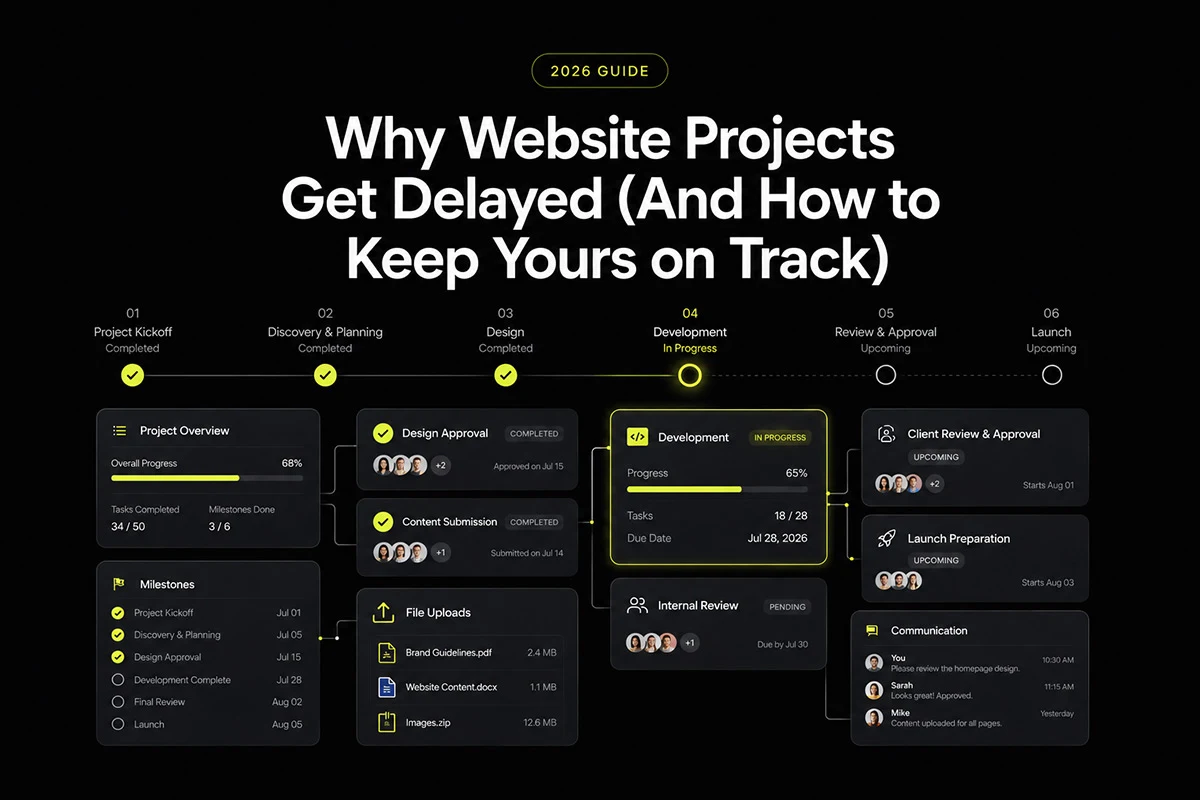
“The agency said my website would be ready in two weeks.”
It’s now been over a month.
Still no website.
If this sounds familiar, you’re not alone.
Website projects often take longer than expected.
Sometimes the delay comes from the agency.
Sometimes it comes from the client.
And surprisingly…
Most delays are completely avoidable.
Understanding why projects slow down can save weeks of unnecessary frustration.
Let’s look at the most common reasons.
1. The Project Starts Without Clear Goals
Many businesses begin with only one instruction:
“We need a website.”
That’s a starting point.
Not a project brief.
Before any design begins, everyone should understand:
- What the website should achieve.
- Who it’s for.
- What action visitors should take.
The clearer the goal, the smoother the project.
Not sure what your website should actually achieve? Explore our guide on generating enquiries before planning your website project.
2. Content Arrives Too Late
This is probably the biggest reason website projects get delayed.
Designers often wait for:
- Service information.
- Company profile.
- Product details.
- Images.
- Team information.
Without content, pages can’t be completed.
And development slows down.
Unsure about the project timelines. Explore here how long a professional website project usually takes.
3. Too Many Changes During Development
Making improvements is completely normal.
Changing the entire direction halfway through isn’t.
For example:
- New pages.
- Different layout.
- New branding.
- Different services.
- Completely new design.
Every major change affects the timeline.
The earlier decisions are finalised, the faster the project moves.
4. Slow Feedback
Website projects move in stages.
The agency sends work.
The client reviews it.
The next stage begins.
When feedback takes several days—or weeks—the entire project pauses.
Quick decisions keep projects moving.
5. Missing Brand Assets
Something as simple as a missing logo can delay an entire project.
Common examples include:
- Logo files.
- Brand colours.
- Product photos.
- Team photos.
- Business documents.
Small things often create big delays.
6. Waiting Until Everything Is Perfect
Many business owners delay approvals because they want everything to be perfect.
Perfection is important.
But waiting too long often creates new delays without improving the final result.
Progress usually beats perfection.
7. Technical Issues
Sometimes delays happen because of technology.
Examples include:
- Domain problems.
- Hosting issues.
- Email configuration.
- Plugin conflicts.
- Existing website migration.
These issues aren’t always predictable.
But experienced agencies usually identify them early.
8. Unrealistic Timelines
Some agencies promise impossible delivery dates simply to win projects.
Building a professional business website takes planning.
Design.
Development.
Testing.
Revisions.
If someone promises everything in a few days, ask what they’re skipping.
Speed is valuable.
But quality still matters.
Not sure what questions to ask before hiring an agency? Explore our guide on choosing the right web design agency before comparing proposals.
9. Poor Communication
Most successful website projects have one thing in common.
Good communication.
Both sides know:
- What’s happening.
- What’s pending.
- What’s needed next.
Clear communication prevents confusion.
And confusion is one of the biggest causes of delays.
10. No Structured Process
Professional agencies follow a process.
Business discovery.
Planning.
Design.
Development.
Testing.
Launch.
When projects skip these steps, or even just one of them, unexpected problems usually appear later.
A clear process doesn’t slow projects down.
It helps finish them faster.
Not sure whether your existing website deserves this much effort? Explore our guide on deciding between a redesign and a completely new website.
How You Can Keep Your Website Project On Track
You don’t need to be a website expert.
But you can make the process much smoother.
Simple things help:
- Share business information early.
- Approve designs on time.
- Keep communication active.
- Avoid unnecessary changes midway.
- Ask questions whenever you’re unsure.
Website development works best when both sides work together.
Final Thoughts
Website projects rarely get delayed because of one big problem.
They usually slow down because of several small ones.
The good news?
Most of them are preventable.
A professional agency should guide the project.
A prepared client helps keep it moving.
When both work together, websites launch faster, with fewer revisions and far less frustration.
Because building a business website isn’t only about great design.
It’s also about a smooth process from start to finish.
Before starting your next website project, explore our complete guide on website pricing so you can plan your investment with confidence.